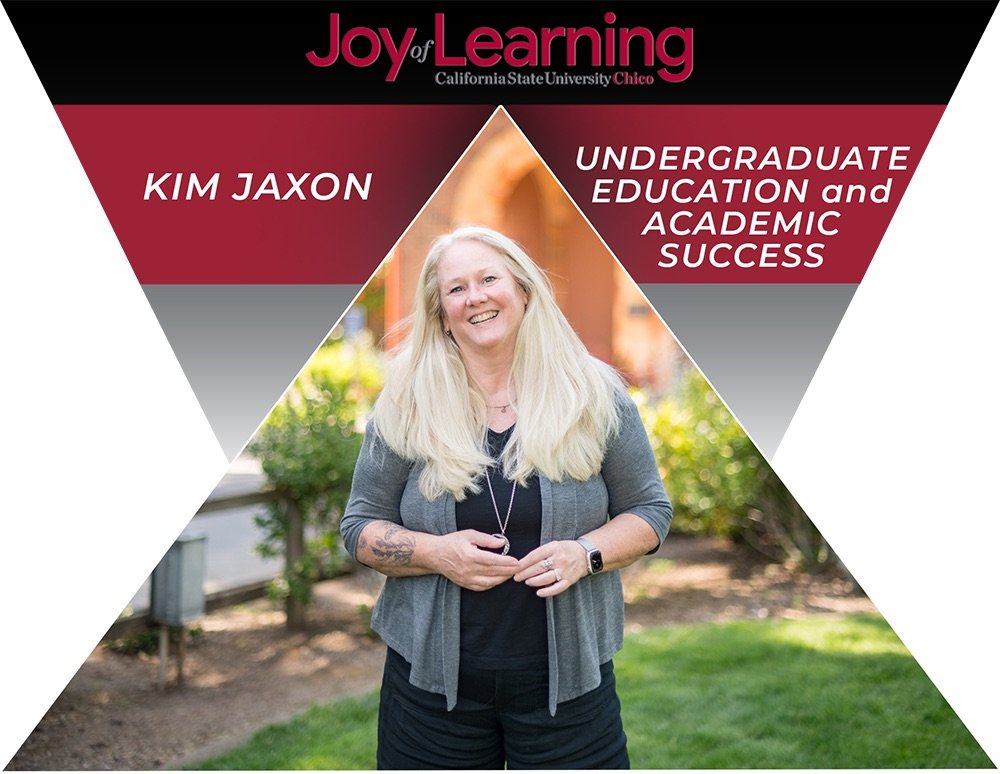
Grateful to be part of the Joy of Learning lightening talks with awesome Chico State colleagues.
Kim Jaxon: The Impact of Undergraduate Research on Learning and Identity

Grateful to be part of the Joy of Learning lightening talks with awesome Chico State colleagues.
Kim Jaxon: The Impact of Undergraduate Research on Learning and Identity
Excited to be part of a new edited collection from Drs. McCabe and Juszkiewicz with my dear friend and colleague Laura Sparks. Chapter 6: “On Non-scalability and Transformative Relationships in the First-Year Composition ‘Jumbo.'”
Excerpt:
This chapter first offers a brief overview of the Jumbo design, then takes up Anna Tsing’s work on “nonscalability” to make the case for the Jumbo model’s generative potential in first-year writing. In particular, we conceptualize the Jumbo in terms of growth, rather than expansion, arguing that it operates outside the logic of scalability. We further advocate for an imaginative, active, not reactionary, approach to course development. As Tsing so aptly puts it, “conceptualizing the world and making the world are wrapped up with each other—at least for those with the privilege to turn their dreams into action. The relationship goes both ways: new projects inspire new ways to think, which also inspire new projects.” We contend that the large-enrollment Jumbo offers powerful possibilities for creating and sustaining vibrant, action-oriented communities—new projects for all of us.
TOC and sample chapter here: link here
Thank you to Brittany and Heather at #okayestmomspodcast for inviting me to a conversation about support for reading and readers. We had so much fun talking about books, literacies, and support for reluctant readers. You can listen–and find links to the resources we discuss–on their site or anywhere you listen to podcasts: www.okayestmoms.com/episode-159
Join Drs. Gunderson, Jaxon, and Justus as they explore ChatGPT including what it is, what it can do, some ethical implications about labor, equity and language diversity, and its potential impacts on education and other fields
Join Drs. Gunderson, Jaxon, and Justus as they explore ChatGPT including what it is, what it can do, some ethical implications about labor, equity and language diversity, and its potential impacts on education and other fields
Link to slide deck with images and notes.
 Thank you so much Dr. Serena Hicks for inviting me to join the #edmoves podcast! Listen to our conversation about course design and the role of technology in the now times. We do a lot of unpacking of the blog I wrote at the beginning of the semester too. Appreciate the opportunity to think through these ideas.
Listen on the edmoves website
Grateful for the conversation we shared about building community in online classrooms led by Elyse Eidman-Aadahl, Director of the National Writing Project, with Dr. Anna Smith from Illinois State University and Michigan teacher Matthew Johnson.
You can find resources we shared here as well: https://writenow.nwp.org/designing-for-connection-and-community-in-the-online-writing-classroom-a20648cafa25